
The Calcutta High Court acquitted a man sentenced to death by a sessions court, citing significant procedural errors and lack of corroborating evidence. The court also acquitted 18 others who had been sentenced to life imprisonment in the same murder case.
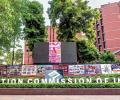
Defending the law for regulating appointment procedures of the chief election commissioner and the deputies, the Centre on Thursday told the Supreme Court that it would be wrong to assume that the prime minister and the other ministers would act in "bad faith" and against "democracy" because they have a numerical majority in the selection procedure.
Karnataka Chief Minister D K Shivakumar has appealed to his Tamil Nadu counterpart C Vijay Joseph to defer his proposed August 3 visit to Bengaluru. The request comes amidst widespread protests in Karnataka following a decision by the CWMA upholding a direction for Karnataka to release 3,500 cusecs of water to Tamil Nadu.

Following the Supreme Court's clean chit in the coal block allocation case, Congress leader Sonia Gandhi has lauded former Prime Minister Manmohan Singh's integrity and accountability, drawing a sharp contrast with the Narendra Modi government's operational style and alleged misuse of investigative agencies.

Justice A M Khanwilkar, the second senior-most judge of the Supreme Court, retired on Friday and thanked bar association leaders for their 'love and affection'.

Chief Justice of India Surya Kant stated that the Supreme Court views technology as an aid to human reasoning, not a replacement, and emphasised developing "Swadeshi Jurisprudence" tailored to India's unique conditions. He highlighted efforts to create an indigenous AI ecosystem for the judiciary and stressed that AI cannot substitute human judgment, empathy, or ethical discernment.

'Unfortunately, the judges chose not to address the issue of whether Hindutva is an appeal to religion.' 'From the moment the judgment is delivered, it is the law of the land.'
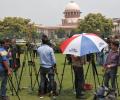
Security has been put on high alert across the nation as the Supreme Court of India is all set to deliver its verdict in the Ram Janambhoomi-Babri Masjid dispute, Sabarimala case and a host of other legal wrangles.

Tamil Nadu Chief Minister C Joseph Vijay opened the sluices of the Stanley Reservoir in Mettur on Tuesday for irrigation in the Cauvery delta districts.

The Supreme Court on Tuesday refused to entertain a plea by the DMK questioning Tamil Nadu Chief Minister C Joseph Vijay's scheduled meeting with the families of Karur stampede victims, stating that the court cannot regulate the executive head's visits.

A former IPS officer and two individuals injured during a recent protest in Delhi have filed a petition in the Supreme Court seeking a ban on the use of pellet guns by law enforcement agencies for crowd dispersal. The petitioners argue that pellet guns are an arbitrary and dangerous tool, violating the right to freedom of assembly and failing the test of necessary and proportional force. They also seek compensation and medical treatment for victims.

The Rajasthan High Court has reserved its order on Asaram's appeal against his conviction and life sentence in a sexual assault case. The trial court sentenced Asaram to life imprisonment in 2018. The High Court conducted hearings in a time-bound manner following Supreme Court directions.

A Reddit post about a hidden camera in a shared living room has reopened an old question -- how far can a landlord interfere in a home he no longer fully controls? Here's what two Mumbai lawyers have to say.
The Supreme Court on Wednesday restored Najam Sethi as chairman of the Pakistan Cricket Board just four days after the Islamabad high court reinstated his predecessor, Zaka Ashraf, as head of the organisation.
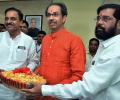
The Supreme Court is deliberating whether a split in the Shiv Sena could originate in the legislature party and then extend to the broader organisation and primary membership, as it hears pleas from the Uddhav Thackeray faction challenging the Election Commission's recognition of the Eknath Shinde-led faction.

'They talked bad about our leaders. They said India was a dead economy. They were not sensitive to the Indian psyche.'

The Shiv Sena-UBT is facing a significant internal crisis, with reports suggesting that 'six to seven' of its nine Lok Sabha MPs are preparing to form a separate group. MP Arvind Sawant has formally requested Lok Sabha Speaker Om Birla not to recognise any such breakaway faction, emphasising the primacy of the political party over its legislative wing.

A detailed timeline of the Sohrabuddin Shaikh alleged fake encounter case, from the initial abduction in 2005 to the Bombay High Court's dismissal of appeals in 2026.
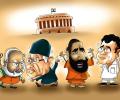
'Of course, I would like a world in which candidates don't ask for my vote on religious (etc) grounds.' 'But will we ever live in a world free of such appeals?' 'More important, will a Supreme Court verdict, by itself, ever deliver such a world?' asks Dilip D'Souza.

Former Tehelka editor-in-chief Tarun Tejpal has been convicted and sentenced to ten years in jail by the Bombay High Court in a 2013 rape case, overturning a trial court's acquittal and criticising its 'perverse' reasoning.

Harish Rana, the first person in India to be granted passive euthanasia, has died at AIIMS-Delhi after being in a coma for over 13 years. His case led to a landmark Supreme Court judgment allowing passive euthanasia and sparked discussions about the right to die with dignity in India.

The Supreme Court has agreed to hear appeals challenging the Madhya Pradesh High Court's decision to designate the Bhojshala complex as a Goddess Saraswati temple, a ruling that also quashed Muslim prayer rights at the historic site.
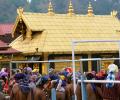
The Travancore Devaswom Board (TDB), managing the Sabarimala temple, argued in the Supreme Court that religious beliefs should be judged subjectively by the community, as the court hears petitions related to discrimination against women at religious places.

Government sources have clarified that a passport has never been considered proof of citizenship in India, a stance consistent for the past 12 years and rooted in the Passport Act 1967. This clarification, reiterated by the Ministry of External Affairs, has drawn criticism from opposition leaders and public figures.

The Supreme Court, hearing pleas on the Shiv Sena split, observed that a political party retains control over its legislature wing and its valid decisions must prevail, but also advocated for granting 'elbow room' to elected representatives for political decisions if a majority 'genuinely disagree' with party directions.
'It is time to acknowledge that the benefits of globalisation have remained in the privileged hands of a few, for whom the world begins and ends with fashion, Bollywood and cricket.'
The Centre has asked the Supreme Court to reconsider its judgements decriminalising adultery and same-sex relationships, arguing they were based on a subjective application of 'constitutional morality'.

The Supreme Court has referred activist Teesta Setalvad's application for the release of her passport to a three-judge bench, in a case related to alleged fabrication of documents in the 2002 Gujarat riots.

The Supreme Court of India has strongly condemned the disclosure of a rape victim's identity and directed all high courts to ensure the anonymity of survivors and their families in court orders, citing the deep stigma associated with such offences and existing legal provisions.

The Delhi High Court is hearing a Public Interest Litigation (PIL) challenging the "intrusive surveillance" of protesters at Jantar Mantar. The Solicitor General argued that videography is for law and order, not snooping, while the petitioner contended it violates privacy. The court has asked police about protest regulation guidelines.

The Uddhav Thackeray faction has told the Supreme Court that the Election Commission's decision to recognise the Eknath Shinde-led unit as the "real Shiv Sena" and grant it the 'bow-and-arrow' symbol was unlawful. Senior advocate Kapil Sibal argued that a split in a legislature party cannot, by itself, amount to a split in the political party, challenging the very basis of the poll panel's jurisdiction and its disregard for the party's 2018 constitution.

Karnataka Chief Minister DK Shivakumar on Sunday asserted that his government was committed to protecting the interests of the state's farmers and people on the Cauvery issue, while appealing to organisations to withdraw the proposed state-wide bandh.

The Delhi High Court has reaffirmed the All India Tennis Association's (AITA) General Body's authority in amending its constitution, directing that proposed changes be put to a clause-by-clause vote by members. This interim order modifies a single judge's ruling, ensuring the federation's democratic processes are maintained while complying with new sports governance laws, with fresh elections mandated by September 30.

Harish Rana, the first person in India to be granted passive euthanasia, has died at AIIMS-Delhi after being in a coma for over 13 years. His case led to a landmark Supreme Court judgment allowing passive euthanasia and sparked discussions about the right to die with dignity in India.

Change of guard in some states and evolving El Nino dynamics are triggering fresh actions on raging water-sharing disputes in several states.
The Allahabad High Court has strongly criticised the state machinery for its "persistent failure" and significant delays in processing a minor rape survivor's plea for medical termination of pregnancy. The court highlighted how seven weeks were lost due to bureaucratic hurdles, leading to the survivor delivering the child despite seeking an abortion. The court also directed authorities to conduct a comprehensive socio-psychological study on rape cases and their consequences.
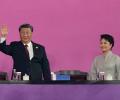
The Delhi High Court has upheld the Equestrian Federation of India's (EFI) selection process for the Asian Games dressage team, dismissing petitions from riders Anush Agarwalla and Sudipti Hajela. The court found no arbitrariness or procedural impropriety, reinforcing the principle that judicial interference in expert selection bodies is limited. Challenges regarding Minimum Eligibility Requirements (MERs), criteria interpretation, and bias were all rejected.

The Supreme Court of India has allowed passive euthanasia for a 32-year-old man who has been in a permanent vegetative state since 2013, highlighting the legal and ethical considerations surrounding the right to die with dignity.
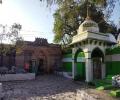
The Madhya Pradesh government has challenged the legal validity of a 1935 order from the former Dhar princely state concerning the religious status of the Bhojshala Temple-Kamal Maula Mosque, arguing it cannot be considered law.

Justice Atul Sreedharan of the Allahabad High Court has made strong observations on systemic corruption in India, suggesting the death penalty for offences under the Prevention of Corruption Act. He criticised the alleged embezzlement of donations at the Ram temple and the Uttar Pradesh government's "bulldozer actions," highlighting the normalisation of corruption and the state's complicity in unauthorised constructions.
